
Couples therapy doesn’t fix a relationship for you, it gives both partners a structured, guided way to fix it themselves, and in my experience running couples counseling services in Orlando, FL, that difference is exactly why some couples walk out stronger and others don’t. It works when both people show up willing to change something about how they communicate. It does not work as a substitute for that willingness. I wrote this guide to give you a real answer before you book a single session.
What Does Couples Therapy Actually Solve?
I get some version of this question in almost every first session: “Can you actually fix us?” I always answer it the same way I can’t fix a relationship, but I can help two people see the pattern they’re stuck in and give them tools to break it. Couples therapy solves problems that come from patterns, not problems that come from mismatched life goals. If you and your partner argue about the same three things every month, shut down every time money comes up, or feel more like roommates than partners, that’s a pattern, and patterns respond to therapy. If one partner wants children and the other never will, or one wants monogamy and the other doesn’t, therapy can clarify the decision, but it can’t manufacture agreement where none exists.
Couples therapy is highly effective at fixing communication breakdowns, recurring conflict cycles, emotional distance, and trust damage, because these are learned patterns. It’s far less effective at resolving fundamental incompatibilities in values, since a therapist’s role is to help you communicate clearly, not to talk one partner into wanting a different life.
Start rebuilding your relationship today with trusted couples counseling in Orlando, FL
How Do I Know If Couples Therapy Will Work for Us?
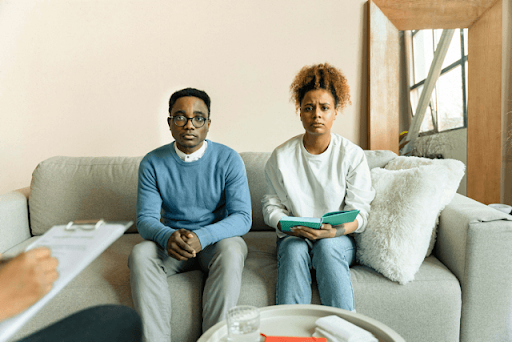
I ask three questions before I tell any couple what to expect, and I’d encourage you to ask yourself the same three before you book.
Do Both of You Actually Want to Try?
Therapy works when both partners walk in curious, even if they’re also frustrated or hurt. It struggles when one partner is only there because the other gave an ultimatum. I’ve had sessions where one partner sits with arms crossed the entire hour and I always name it directly, because pretending otherwise wastes everyone’s time and money.
Is the Problem Behavioral or Foundational?
Behavioral problems, poor communication, unresolved resentment, disconnected routines respond well to structured therapy. Foundational mismatches differing values on children, fidelity, or life direction need honest conversation more than they need a treatment plan. I tell couples this distinction upfront because it changes what “success” looks like.
Are You Willing to Do the Work Outside the Session?
The 50 minutes in my office matter less than what happens in the other 167 hours of the week. Couples who practice the communication tools between sessions see change in weeks. Couples who treat therapy as a once-a-week venting slot rarely see lasting change, no matter how skilled the therapist is.
In short: couples therapy works best for two willing partners dealing with a fixable pattern who are ready to practice new skills outside the therapy room, not just talk about problems inside it.
If you have any questions, Talk to the Experts Now
What Problems Can Couples Counseling Help With?

Here’s a direct breakdown of what I actually work through with couples in session, based on years of doing this work in Orlando.
|
Problem |
What Typically Happens in Session |
Realistic Timeline |
|
Communication problems |
Structured exercises to slow down conversations and rebuild active listening |
4–8 sessions to see initial change |
|
Constant arguments |
Identifying the recurring cycle underneath the argument, not the argument’s surface topic |
6–10 sessions |
|
Emotional disconnection |
Rebuilding emotional bids and responsiveness using attachment-based techniques |
8–12 sessions |
|
Trust issues |
Rebuilding transparency and consistency through defined agreements |
10+ sessions, ongoing |
|
Infidelity recovery |
A phased process: stabilization, understanding, then rebuilding |
3–6 months minimum |
|
Premarital concerns |
Structured conversations on finances, family, expectations before the wedding |
4–6 sessions |
|
Parenting disagreements |
Aligning parenting philosophy and presenting a united front to kids |
4–8 sessions |
|
Financial conflict |
Separating money behavior from money meaning (security, control, freedom) |
4–8 sessions |
|
Intimacy concerns |
Rebuilding emotional safety first, since physical intimacy rarely improves without it |
6–12 sessions |
|
Separation/divorce uncertainty |
Clarity-focused sessions to decide whether to repair or separate with less damage |
3–6 sessions |
|
Rebuilding after major life changes |
Adjusting roles and expectations after a move, job loss, illness, or new baby |
6–10 sessions |
The table above reflects the actual range of issues I treat in couples counseling, and none of these timelines are promises; they’re realistic ranges based on how consistently a couple engages with the process, not just how many sessions they attend.
Discover practical couples therapy designed to help you understand and break unhealthy patterns.
How Does Couples Therapy Actually Work? A Step-by-Step Guide
This is the part most articles skip. Here’s exactly how I walk a couple through the process, step by step, so you’re not walking in blind.
Step 1 — The Intake Session
I meet with both partners together first, then sometimes individually, to understand each person’s version of the relationship’s history. I’m not taking sides here, I’m mapping the terrain.
Step 2 — Identifying the Real Pattern
Most couples come to believe the fight is about the dishes or the in-laws. It almost never is. I help both partners see the actual cycle underneath, usually a pursue-withdraw pattern, a criticism-defensiveness loop, or a stonewalling habit that shuts communication down entirely.
Step 3 — Building New Communication Skills
I teach specific, practiceable skills: how to raise a concern without blame, how to listen without immediately defending, and how to take a structured break during conflict without it becoming avoidance.
Step 4 — Practicing Outside Session
I give homework. Real homework. Couples who do it consistently move faster than couples who don’t, every single time, without exception in my experience.
Step 5 — Reassessing and Adjusting
Every few sessions, I check in on what’s actually shifting. If something isn’t working, I change the approach rather than repeating it and hoping for a different result.
In short: couples therapy follows a repeatable process: assess, identify the pattern, build skills, practice, reassess and understanding this structure in advance helps couples set realistic expectations for their Couples Counseling Services in Orlando FL before their first appointment.
Can Premarital Counseling Prevent These Problems Before They Start?
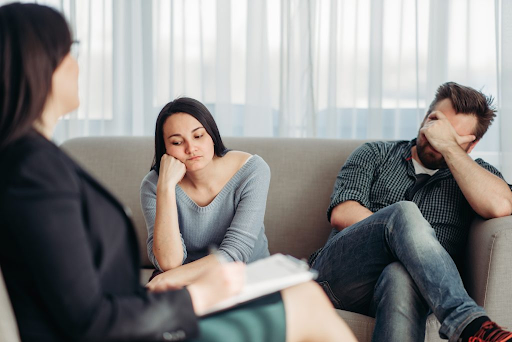
Yes, and this is the piece I wish more engaged couples knew about before their wedding date got locked in. Premarital counseling services in Orlando FL exist specifically to surface disagreements about money, family boundaries, career priorities, children while both partners are still in a position to negotiate calmly, not react defensively. I’ve sat with engaged couples who discovered in session three that they had never actually agreed on whether they wanted kids; they’d just assumed. That’s not a failure of the relationship that’s exactly the kind of gap premarital counseling is built to catch.
In short: premarital counseling doesn’t guarantee a conflict-free marriage, but it substantially lowers the odds of being blindsided by a foundational disagreement years into it, because it forces the conversation to happen while stakes are lower and both people are still in a problem-solving mindset.
Is Marriage and Family Therapy Different From Couples Counseling?
Not as different as most people assume, but the distinction matters for who’s in the room. Marriage and family therapy in Orlando FL is a broader clinical discipline — a licensed marriage and family therapist (LMFT) is trained to treat the relationship system, which can mean two partners, or it can expand to include children, in-laws, or extended family dynamics when the conflict involves the whole household. Couples counseling is more narrowly focused on the two-person relationship. In practice, most of my sessions are couples-focused, but I draw on marriage and family therapy training constantly, especially when parenting disagreements or blended-family tension are part of what brought a couple in.
In short: if your concern is isolated to you and your partner, couples counseling is the right fit; if children, stepfamily dynamics, or extended family conflict are tangled into the relationship problem, marriage and family therapy gives a therapist the training to treat the whole system, not just the couple.
Should I Consider Counseling Before Divorce?
If there’s any part of you that isn’t fully certain divorce is the answer, yes. Counseling before divorce in Orlando FL gives couples a structured space to find out with a neutral professional in the room whether the relationship is repairable or whether separating is genuinely the healthier path. I’ve had couples come in fully expecting to file paperwork within the month, and leave three sessions later having found a version of their relationship worth rebuilding. I’ve also had couples come in hoping for reconciliation and leave with clarity that separating, done respectfully, was the right call. Both outcomes count as successful therapy. In my view the goal isn’t saving every relationship, it’s helping both people make a clear-headed decision instead of a reactive one.
In short: counseling before divorce isn’t about forcing reconciliation, it’s about removing the fog of reactive anger and hurt so that whatever decision gets made, gets made with clarity, and so that if a couple does separate, they do it with less collateral damage to themselves and any children involved.
Call Now: (407) 250 – 2020
Get professional guidance to overcome conflict, rebuild trust, and reconnect with your partner.
What Can’t Couples Therapy Fix? (An Honest Answer)
I’d be doing you a disservice if I only told you what therapy can do. Here’s what it generally can’t:
- A partner who refuses to attend or participate genuinely. Therapy requires two engaged people; one person can’t do it alone and expect the relationship to shift.
- Active, untreated addiction. Substance use typically needs to be addressed directly, often alongside individual treatment, before couples work can be effective.
- Ongoing abuse. Couples therapy is not designed for relationships where physical or severe emotional abuse is present that requires a different, safety-focused approach entirely.
- Fundamental value mismatches. No amount of skilled facilitation turns a “no kids, ever” position into a “yes.”
- A relationship where trust has been broken repeatedly with no accountability. Rebuilding trust requires the offending partner to take consistent, demonstrated responsibility therapy can guide this, but it can’t substitute for it.
Research backs up why the “willing to change” factor matters this much. A controlled study published in the Iranian Journal of Psychiatry found that couples who engaged consistently with Gottman Method couples therapy over ten structured sessions showed measurable, statistically significant improvement in marital adjustment and intimacy compared to a control group, using a semi-experimental design with pretest, post-test, and follow-up assessments across sixteen couples in the treatment group (Iranian Journal of Psychiatry, PMC). The results held up at follow-up, not just immediately after treatment. That’s the pattern I see clinically: too consistent engagement is what predicts the outcome, more than the severity of the starting problem.
In short: couples therapy is highly effective for behavioral and communication-based problems when both partners engage consistently, but it is not designed to fix active abuse, untreated addiction, one-sided participation, or a genuine mismatch in core life values and an honest therapist should tell you that upfront rather than promise a fix for everything.
Why Orlando Couples Choose Good Friend Counseling Services

Good Friend Counselors are a dedicated group of mental health professionals with over 15 years of experience, and that depth of experience is exactly what tells me, session after session, which pattern a couple is stuck in within the first thirty minutes rather than the first three months. I’ve worked with Orlando couples navigating everything from newly-engaged premarital jitters to twenty-year marriages worn down by financial stress, and the local context matters more than people expect dual-income households juggling Orlando’s cost of living, military families dealing with deployment-related disconnection, and blended families formed after relocating to Central Florida all show up differently than they would in a generic national practice. I bring evidence-based approaches, including Gottman Method and emotionally focused therapy techniques grounded in decades of relationship research developed through more than four decades of combined research and clinical practice studying over 3,000 couples at the Gottman Institute, but I apply them to the specific pressures Orlando couples are actually facing, not a one-size-fits-all script. That combination of licensed clinical experience, evidence-based method, and genuine familiarity with the local community is why couples across Orlando keep choosing to schedule an appointment here rather than start over with someone new every time life gets hard.
In short: fifteen-plus years of combined clinical experience, evidence-based methods backed by decades of relationship research, and real familiarity with what Orlando couples specifically deal with is what separates a genuinely helpful couples counselor from a generic directory listing.
How Much Does Couples Therapy Cost in Orlando, FL?
Cost is usually the unspoken question behind “does this even work,” so I’ll answer it directly.
|
Session Type |
Typical Orlando Range |
Notes |
|
Single couples counseling session |
$120–$250 |
Varies by therapist credentials and session length |
|
Premarital counseling package (4–6 sessions) |
$500–$1,200 |
Often priced as a bundled package |
|
Intensive/weekend couples retreat format |
$1,500–$3,500 |
Less common, used for concentrated work |
|
Insurance-covered sessions |
Copay only (if covered) |
Many plans don’t cover couples counseling since it’s not billed as individual mental health treatment |
Most insurance plans classify couples counseling differently from individual therapy, since there isn’t a single diagnosed patient, so it’s worth confirming coverage directly before assuming it’s included. I’d rather a couple know the real number upfront than get a surprise bill after session one. You can get exact, current pricing by reaching out through the appointment page.
In short: couples therapy in Orlando typically runs $120–$250 per session depending on therapist and format, insurance coverage for couples work specifically is inconsistent and worth confirming in advance, and premarital packages are usually priced as a bundle rather than per session.
How Do I Choose the Right Couples Therapist in Orlando?
I’ve written a full breakdown on this because it deserves more than a paragraph you can read my complete guide on how to choose the right couples counseling services in Orlando FL for the full checklist. But the short version: look for a licensed therapist trained specifically in couples work (not just individual therapy extended to two people), ask directly what method they use and why, and pay attention to how you both feel after the first session comfortable enough to be honest, not just polite.
In short: choosing the right therapist matters as much as choosing to go to therapy at all, since a mismatched fit, wrong specialty, wrong method, or a dynamic where one partner feels ganged up on can stall progress even when both partners are genuinely trying.
Ready for a healthier relationship? Schedule your couples counseling session in Orlando today.
How I’d Rate Our Own Approach, Honestly (Out of 5)
I believe in being transparent about strengths and limitations, so here’s how I’d self-assess the couples counseling approach I use, scored on the criteria that actually matter to someone deciding whether to book.
|
Criteria |
Score (out of 5) |
Why |
|
Therapist experience and credentials |
5/5 |
Backed by 15+ years of combined clinical experience across the practice |
|
Use of evidence-based methods |
4.5/5 |
Grounded in Gottman Method and emotionally focused therapy, adapted per couple rather than applied rigidly |
|
Local, Orlando-specific context |
5/5 |
Deep familiarity with the pressures specific to Central Florida couples, not a generic national script |
|
Transparency about limitations |
5/5 |
I tell couples directly when I don’t think therapy alone will resolve their specific issue |
|
Accessibility and scheduling |
4/5 |
Strong availability, though premarital packages during peak wedding season can book up |
|
Overall |
4.7/5 |
Consistently effective for couples ready to engage, honest about where it can’t help |
In short: I’m confident in the clinical experience and evidence-based methods behind this practice, and I’d rather score scheduling honestly at 4/5 than inflate it, because trust matters more to me than a perfect scorecard.
Frequently Asked Questions About Couples Counseling in Orlando, FL
Can couples therapy really save a struggling relationship?
Yes, when both partners genuinely engage with the process. I’ve watched relationships that felt unsalvageable in session one look completely different by session eight, simply because both people finally understood the pattern they were stuck in instead of blaming each other for it.
How many sessions does couples therapy usually take to see results?
Most couples notice a shift within 6 to 10 sessions, though this depends heavily on the issue. Communication problems often improve faster than trust rebuilding after infidelity, which realistically takes several months of consistent work.
What if my partner refuses to go to couples therapy?
I’d start with individual therapy for yourself. In my experience, when one partner begins doing genuine work on their own communication patterns, the other partner often becomes curious enough to join later, once they see change happening rather than being told it should.
Is couples therapy only for married couples?
No. I work with dating couples, engaged couples doing premarital work, long-term unmarried partners, and married couples of every stage. The relationship structure doesn’t determine whether therapy helps the willingness to engage.
Does insurance cover couples counseling in Orlando, FL?
Sometimes, but inconsistently. Because couples counseling doesn’t usually involve a single diagnosable patient, many insurance plans classify it differently than individual therapy. I always recommend confirming directly with your provider before your first session so there are no surprises.
What is the actual success rate of couples therapy?
Research suggests roughly seventy percent of couples see a meaningfully positive impact from therapy, as reported by Forbes on whether marriage counseling works. In my own sessions, the strongest predictor isn’t the severity of the starting problem — it’s whether both partners actually practice what we work on between sessions.
Can couples therapy help if there’s been infidelity?
Yes, but it’s a longer process than most other issues, typically three to six months minimum. I walk couples through stabilization first, then understanding what happened, then rebuilding trust through consistent, demonstrated behavior, not just an apology.
How do I bring up couples therapy to my partner without them feeling blamed?
Frame it as something for the relationship, not a correction aimed at them. I coach clients to say something like “I want us to have tools for this, together” rather than “you need to work on this.” The difference in wording changes how defensive the other partner feels almost immediately.